
Beyond the Internship: A Fellow’s Learning Experience at Harvard

WEDNESDAY, September 23, 2026
Linda Lin, Marketing & Social Media Fellow
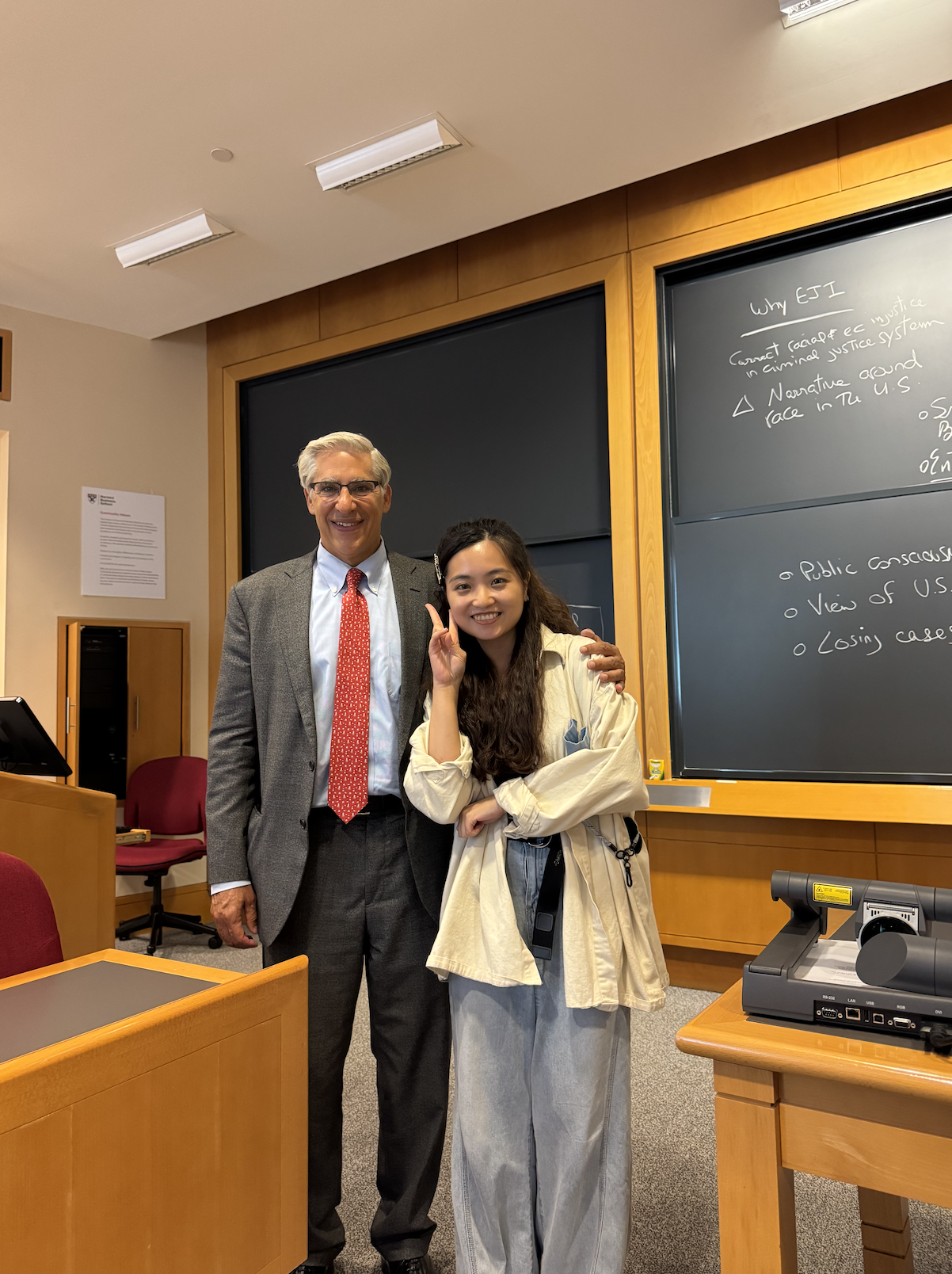
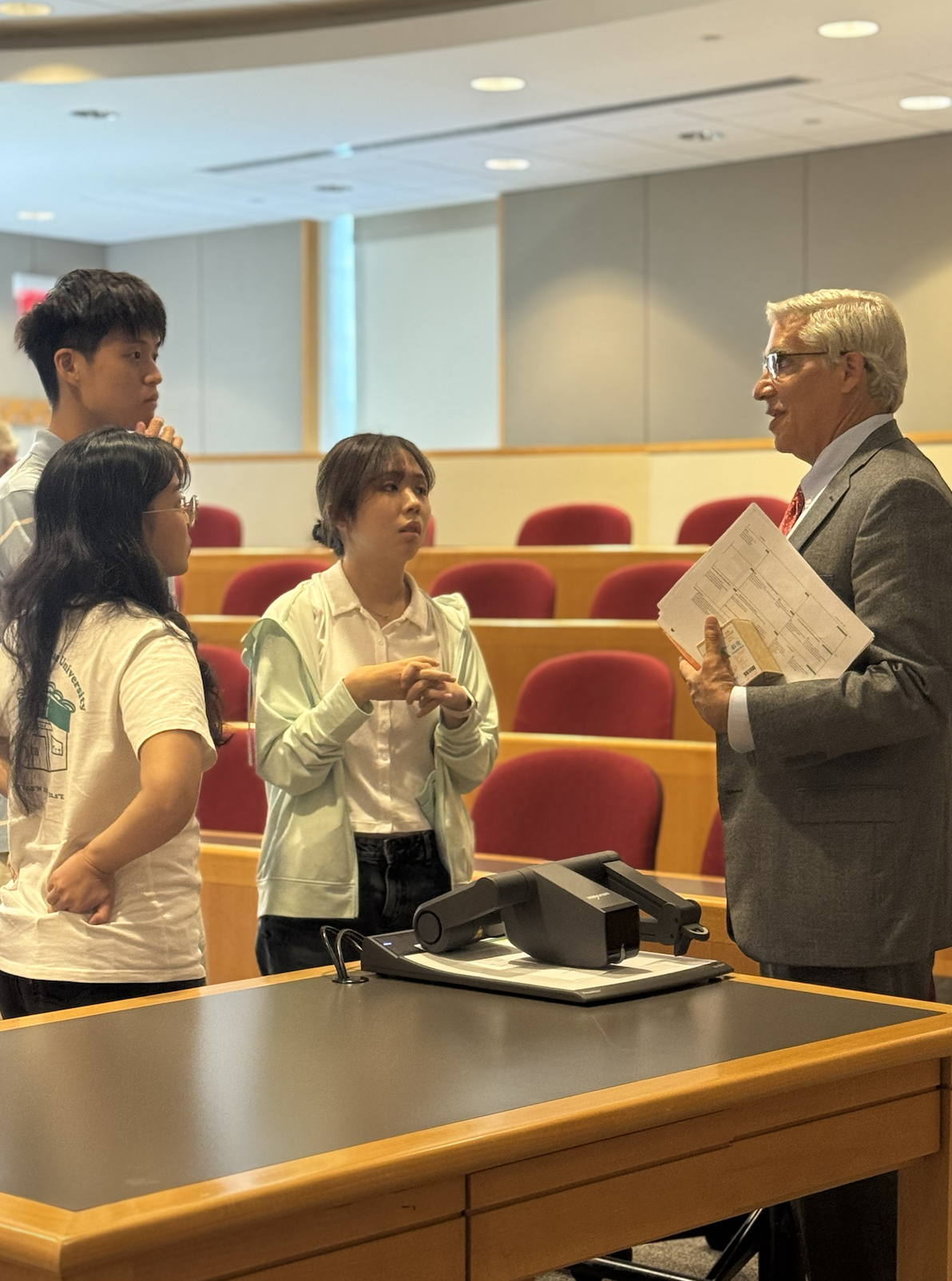
Last Friday, I had the opportunity to join other CFSI Fellows at Harvard Business School for a session on Social Entrepreneurship and Systems Change, taught by Gerald Chertavian, the founder and senior advisor of Year Up United.
CFSI’s mission is to educate and inspire the next generation of problem solvers.This session helped me realize that becoming a problem solver involves more than learning how to analyze problems or design solutions. Developing the right mindset is itself an essential part of the process.
When confronting complex social issues, we rarely find answers that are simple, immediate, or universally accepted. What we truly need to learn is how to define a problem, understand the system in which it exists, and identify a place where change can begin—even amid uncertainty.
Learning Through a Real Case
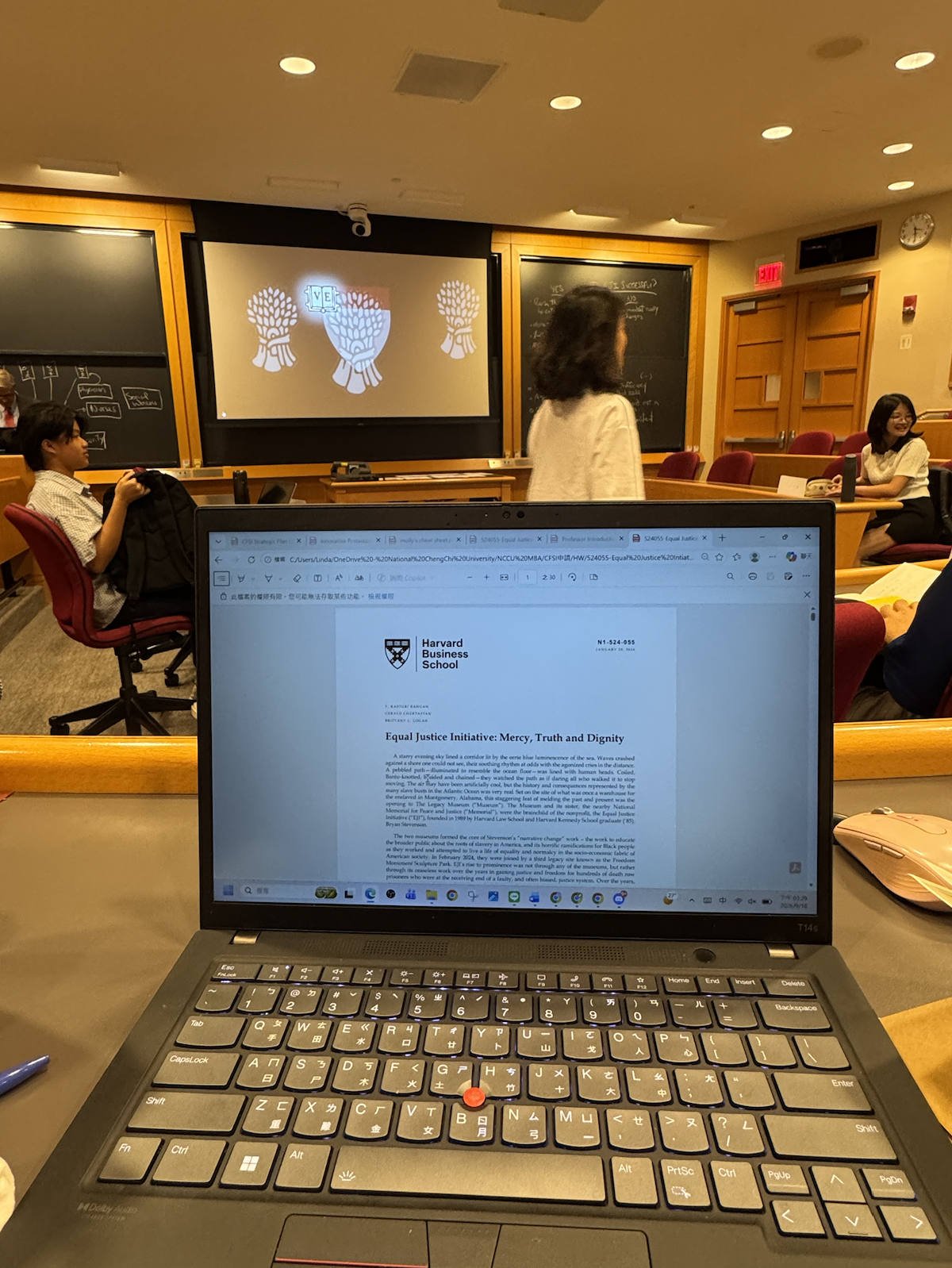
Before class, we read a case about the Equal Justice Initiative (EJI), founded by Bryan Stevenson. EJI began by providing legal representation to people who had been wrongfully convicted or unfairly sentenced. Over time, its work expanded into public education, narrative change, museums and memorials, and most recently, a hunger-relief initiative in Alabama.
At first glance, these areas may appear very different. What does representing people on death row have to do with building a museum or distributing food assistance?
As our discussion progressed, however, we began to see that EJI is not simply responding to individual legal cases. It is continually asking why the same unjust outcomes continue to occur and examining how history, economics, public policy, and social perceptions work together to sustain the broader system behind them.
Through the case method, the concepts of “social entrepreneurship” and “systems change”—which can initially feel abstract—became much more concrete. At the same time, the discussion revealed the difficult and often unforgiving realities of pursuing social change.
This was also my first experience with the Harvard Business School case method. Instead of giving us a clear conclusion, Professor Chertavian continuously asked us to explain how we understood the problem, what evidence supported our opinions, and whether we might define success differently. He reminded us that there was often no single correct answer—even his own opinion about EJI’s hunger initiative had changed several times.
That made the discussion feel much more real. Social entrepreneurship is not simply about having a meaningful mission. It also involves making difficult choices when resources are limited, results are uncertain, and several reasonable approaches may exist at the same time.
Defining the System Before Solving the Problem
One of the most useful ideas from the class was a simple framework for mapping a system:
Define the boundary of the system.
Identify the stakeholders, variables, and relationships within it.
Locate the barriers or bottlenecks producing the current outcome.
Determine which leverage points we may realistically influence.
The first step—defining the boundary—was especially important to me. The way we draw the boundary determines what we see as the problem.
If EJI defines the problem only as a lack of legal representation, its solution may focus on helping more individuals in court. But if it defines the problem more broadly as a system shaped by racial inequality, poverty, public narratives, and unequal access to power, then litigation alone may not be enough.
This broader view helps explain why EJI expanded into museums and public education. Bryan Stevenson recognized that legal decisions do not exist separately from public narratives. If people’s understanding of race and justice does not change, legal and policy progress may also be difficult to sustain.
The class also introduced several possible leverage points for changing a system, including policies, practices, resource flows, relationships, power dynamics, and mental models. Among these, mental models may be the least visible and the most difficult to change. They shape how people interpret a social issue, whom they believe is responsible, and which solutions they consider possible.
How Do We Define Success?
Our discussion of EJI also raised a more difficult question: How do we know whether a social-impact organization is successful?
Some outcomes are relatively visible. EJI has helped more than 150 people on death row obtain relief or release, contributed to important legal and policy changes, attracted significant financial support, and brought hundreds of thousands of visitors to its museum and memorial sites.
Other outcomes are harder to prove. A museum may attract many visitors, but how do we know whether their beliefs or future actions have changed? A book or film may raise awareness, but does that awareness eventually lead to structural change?
The discussion showed me that social impact can be measured at several levels. We can count the number of people served, legal victories, visitors, or funds raised. But changes in narratives, attitudes, and systems may take much longer to appear and may be difficult to attribute to one organization.
For problems that have developed over generations, success may not mean completely solving them within one leader’s lifetime. It may also mean moving the system forward, creating new possibilities, and continuing the work even when progress is not immediately visible.
Mission Expansion or Mission Drift?
The most challenging part of the case was EJI’s hunger-relief initiative. The program provides gift cards to families experiencing food insecurity while maintaining personal contact with participating households.
During the discussion, I shared that addressing poverty made sense to me because poverty is a fundamental issue connected to hunger, education, housing, and access to justice. At the same time, I wondered whether EJI had enough organizational capacity to expand into this area without taking resources away from its existing legal and advocacy work.
The initiative reflects several of EJI’s core principles, including dignity, individual choice, and proximity to the people it serves. However, it also raises practical questions. Can such a highly personal model be scaled? Does short-term food assistance address the bottleneck that produces poverty, or does it mainly respond to one of its symptoms? What might the organization have to give up in order to continue this work?
There was no clear yes-or-no answer. Professor Chertavian suggested that the initiative could also be understood as a small experiment—an opportunity for EJI to learn before deciding whether and how to expand.
This helped me understand that an evolving mission is not automatically a sign that an organization has lost focus. The more important questions are whether the new work remains connected to the root problem, what the organization is learning, and whether it has the resources and capabilities to create meaningful impact.
A Different Mindset for Social Change
My biggest takeaway from the session was that systems change begins with how we think about a problem.
It requires us to look beyond the most visible symptom, examine the system producing it, and identify where change may be possible. It also requires humility. There may not be one correct way to define the problem, one perfect intervention, or one measure that captures the full meaning of success.
But having no single correct answer does not mean that every answer is equally effective. We still need to make our assumptions clear, examine the tradeoffs, collect evidence, and remain willing to revise our approach.
For me, this class made social entrepreneurship feel more realistic and more complex. Creating change is not only about having a strong mission or helping more people through one program. It is also about knowing when to widen the boundary, where to find the bottleneck, which leverage point to act on, and how to continue learning when the path forward is uncertain.